M&A INTEGRATION
M&A benefits integration starts with a complete view of every plan.
After a deal, you inherit plans you have never seen, or you need a clear record of what goes with a business you sell. Origin™ brings every plan, vendor and cost into one structured view.
Common M&A benefits integration challenges
Without one structured record, every comparison and every separation starts from the beginning, under deal pressure.
Acquired benefit plans
The deal has closed, but you still can't say what the acquired company offers, what it costs or how it compares to yours.
Benefits harmonization
You need to harmonize plans, but the data is in different formats and languages, with nothing to compare them against.
Divestitures and carve-outs
A business unit is being sold, and you can't say with confidence which plans, contracts and vendors go with it.
VISIBILITY · SEE IT
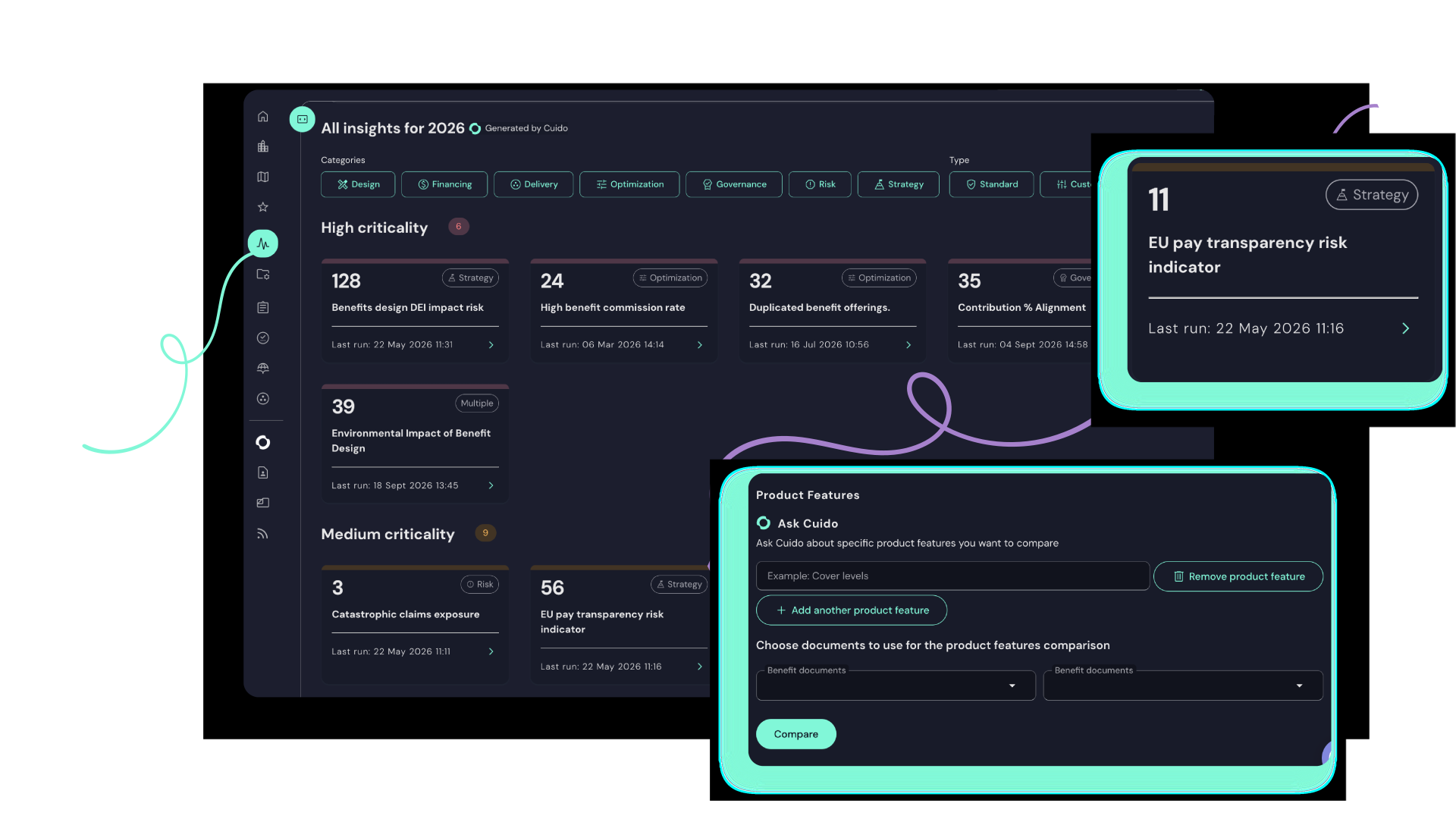
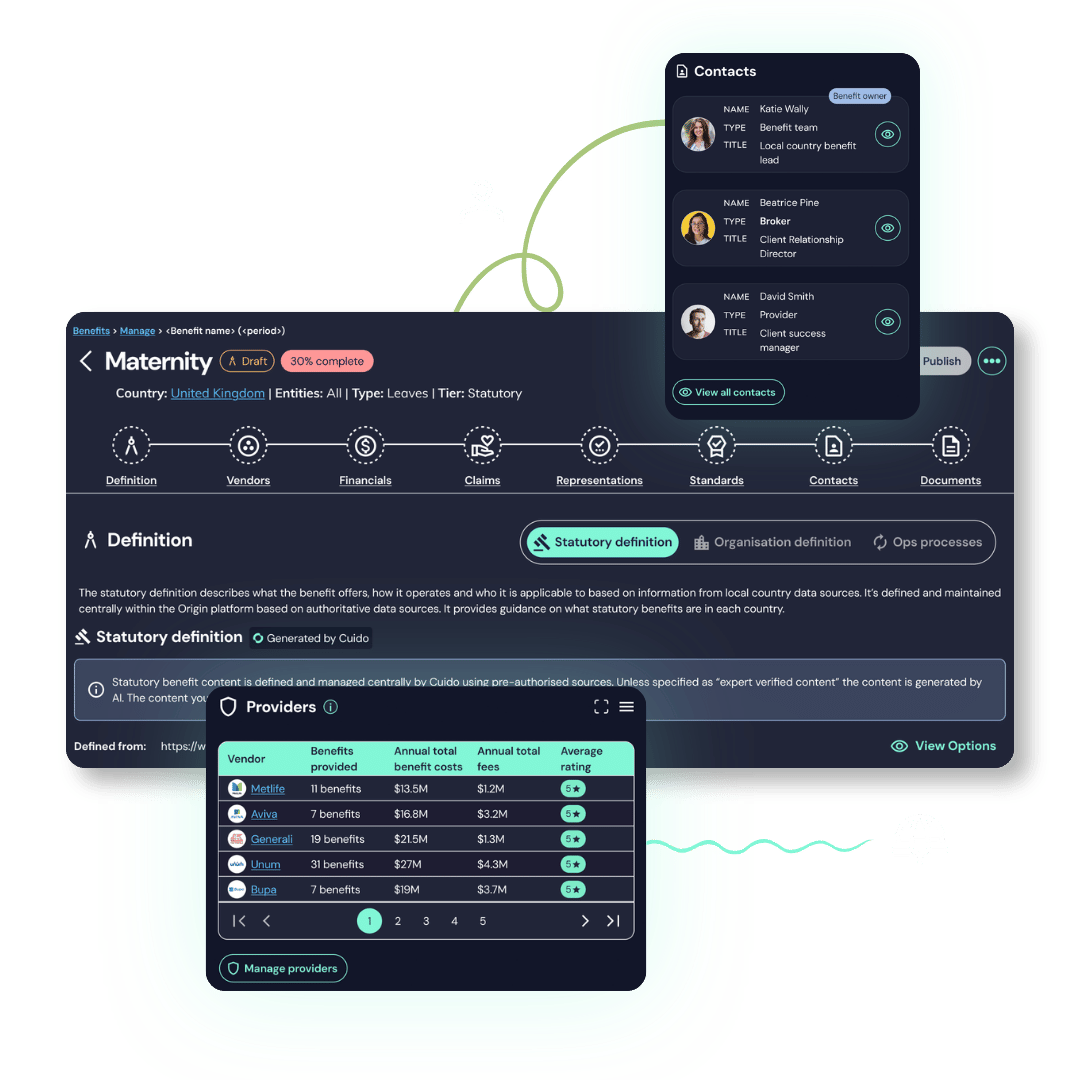
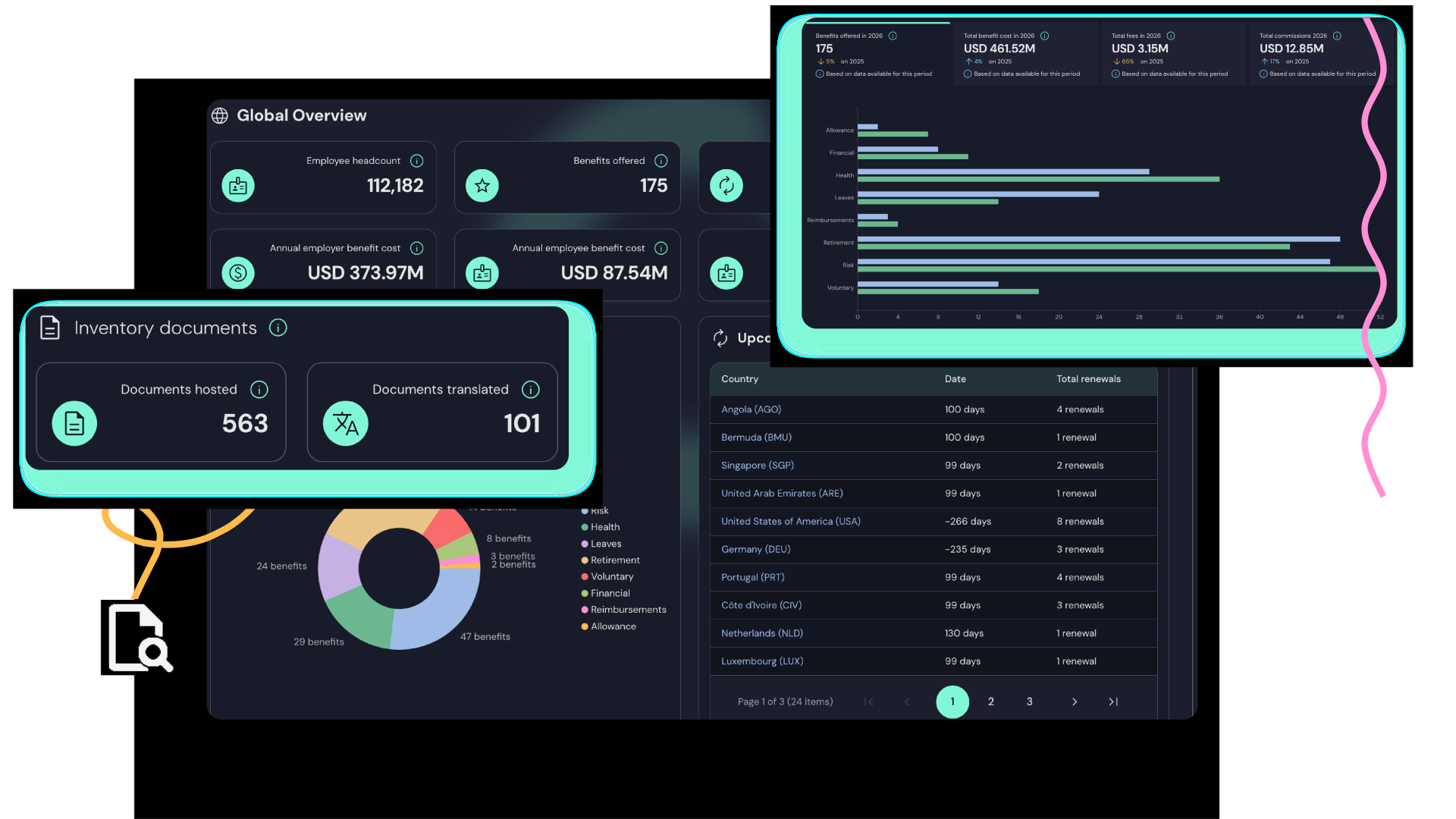
One inventory of acquired and existing benefit plans
Plans, vendors and costs from both businesses in one structured record, so integration starts from facts.
Every plan in every country in one place, so you can answer “what did we acquire?” with confidence.
INTELLIGENCE · DECIDE IT
Benefit comparison across countries and plans
See where acquired plans differ from yours, so harmonization decisions rest on evidence.
GOVERNANCE · RUN IT
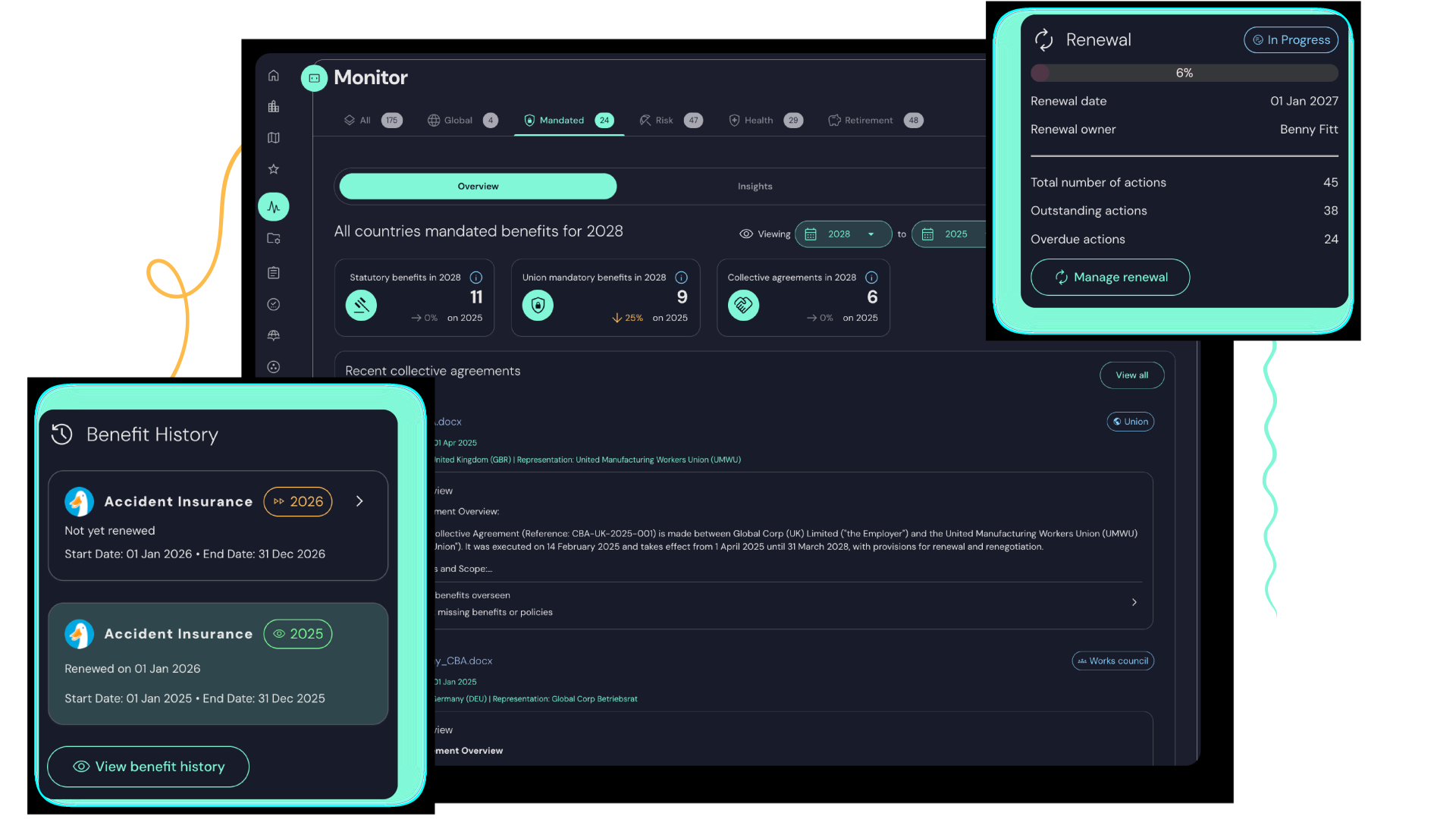
A recorded process for integration and separation
Every change and decision is recorded, so harmonization follows one process and the history stays with the data.
Every broker and insurer contract mapped with terms and renewal dates, so contracts that span both sides of a deal surface before close.
What this looks like in practice
How benefits teams use Origin when a business is bought, or plans need to come together.
ACQUIRED BENEFIT PLANS
A structured benefits comparison during a multi-billion-dollar acquisition
A global pharma company used Origin to compare and merge benefits during a multi-billion-dollar acquisition. Instead of building the comparison by hand, the team worked from structured data. Their reaction to the output was one word: “WOW.”
POST-ACQUISITION INTEGRATION
Acquisitions in four countries, one view of the inherited benefits
A US healthcare provider almost doubled its Latin American workforce through acquisitions in four countries. It inherited benefits it could not easily see. Origin now gives the team one view of them, so it can plan improvements for the next budget.
"After the acquisition we have some legacy provisions… Origin is helping us to understand the benefit side to do the improvement for the next budget."
Total Rewards and Cost Planning lead, US healthcare provider
M&A benefits integration
FAQs
M&A benefits integration is the work of bringing an acquired company's benefit plans, vendors and costs into the buyer's program. It means building an inventory of what was acquired, comparing it with existing plans and deciding what to harmonize, and when. In a divestiture, the same work decides which plans go with the business being sold.
No. Due diligence is a legal and financial process, and Origin doesn't host data rooms. Origin is the benefits data foundation your integration or separation team works from.
Once the legal transition is complete and the business is part of your organization. Before then, you can export your own plan data to support comparisons outside the platform.
See how Origin supports M&A benefits integration.
Start with one priority, such as a recent acquisition, one country or the next renewal, and build from there.